
The early development of cinema
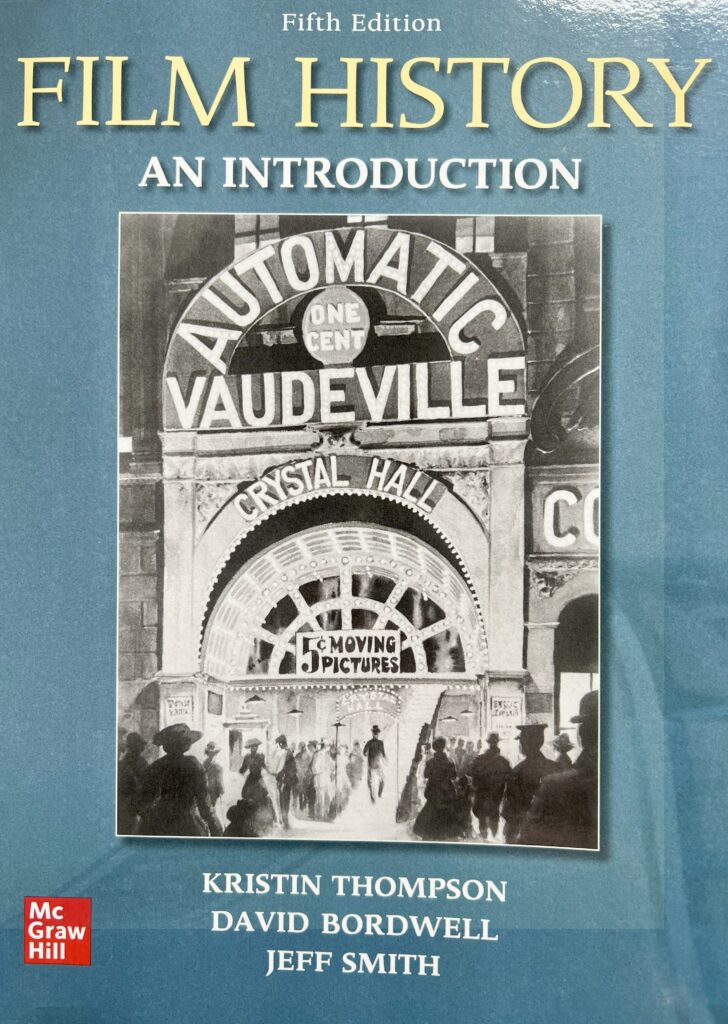
This textbook, “Film History – An Introduction,” by authors Kristin Thompson, David Bordwell and Jeff Smith, was used in a recent class I had in early cinema history and provides some fine examples of just how far cinema has progressed since its beginnings in the late 19th century. What began as a fascination with moving images, blossomed from there and eventually morphed into the industry it has become.
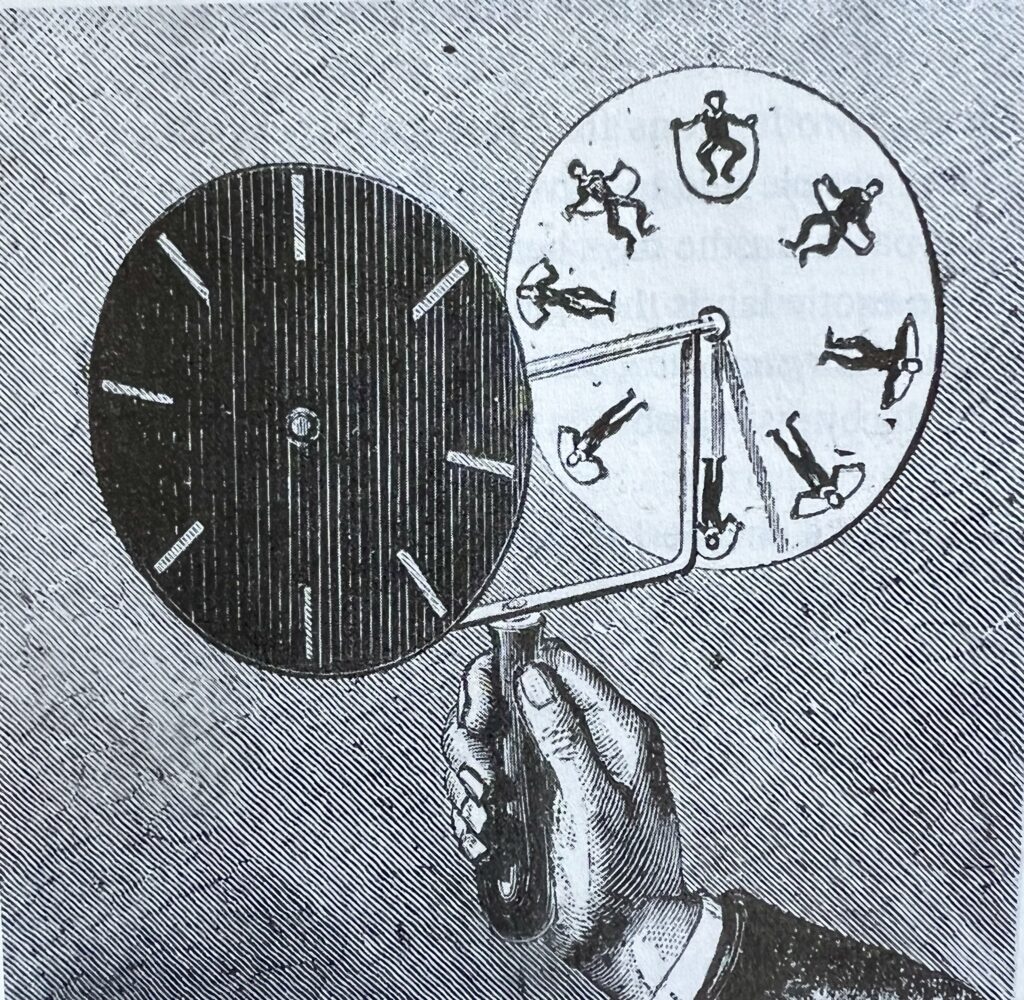
Let’s travel through time, all the way back to 1832, when physicist Joseph Plateau and mathematician Simon Stampfer created a device called the Phenakistoscope. As someone looked through a slot in the stationary disc, they received the impression of motion of the Phenakistoscope’s spinning disc.
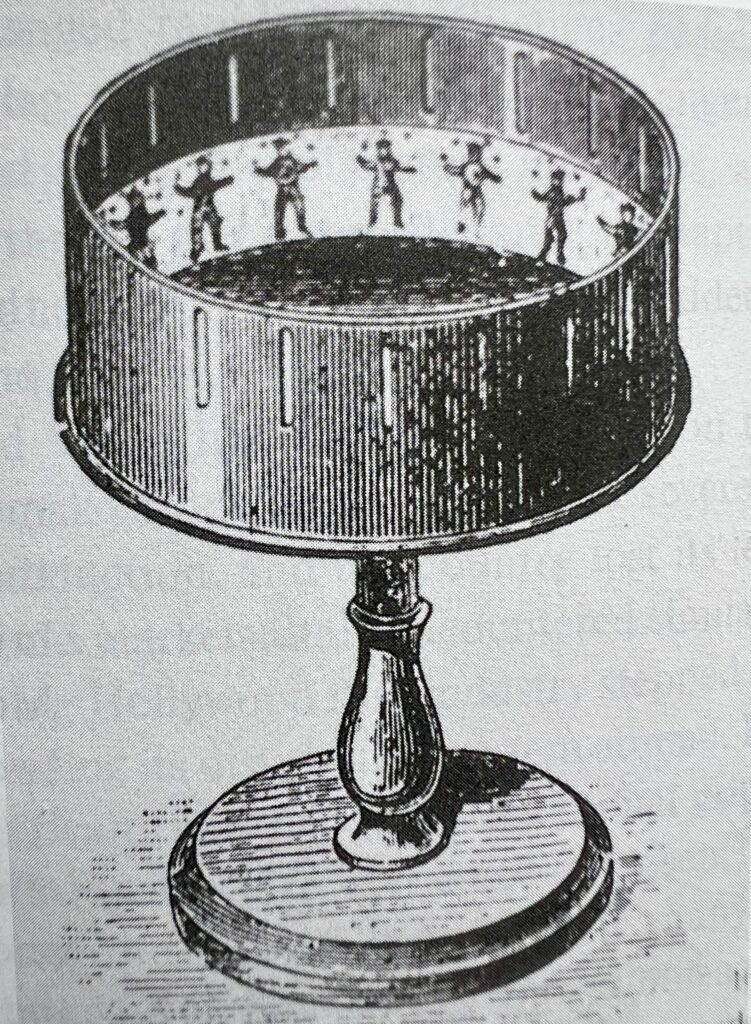
Here is another early example of a similar device invented the following year, in 1833, called the Zoetrope, which was widely sold after 1867. As the viewer looked through the revolving slots, they received the impression of moving images.
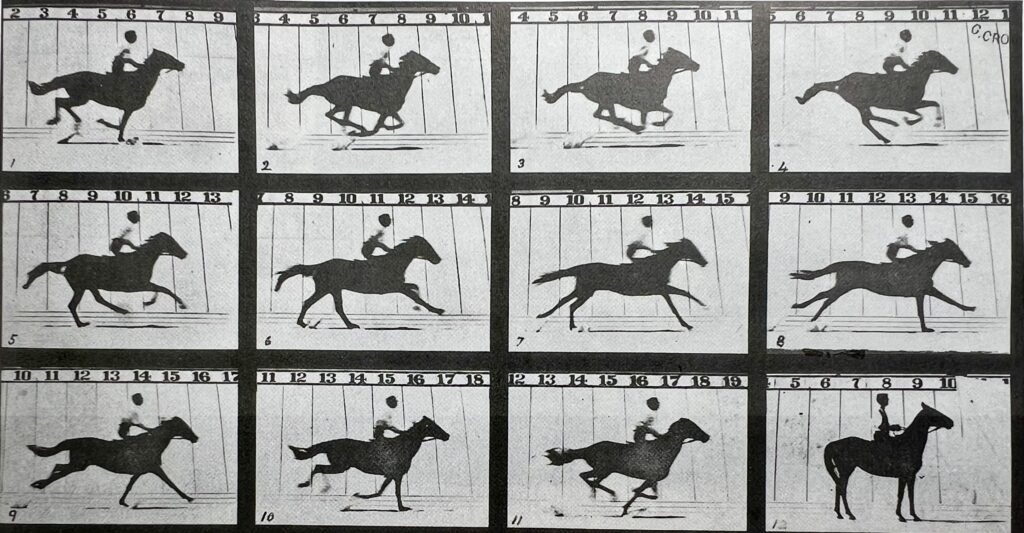
In 1878, a man named Eadweard Muybridge was asked by California ex-governor, Leland Stanford, to help analyze motion so he devised a method to study the motion of horses, using a set of 12 cameras, each making an exposure of just ½ second of the horse’s movement. Muybridge then devised a lantern to project the moving images of horses copied from the photographs onto a revolving disc, and in this manner made a significant contribution to understanding movement.
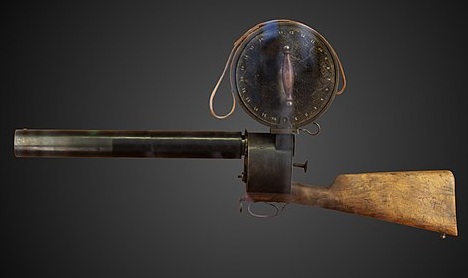
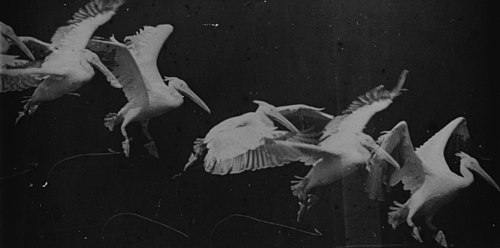
In 1882, French physiologist, Étienne-Jules Marey, used a photographic gun to study the rapid movement of birds and other animals. He was the first man to use a flexible stock to expose a series of photographs on a strip of film at speeds of up to 120 frames per second.
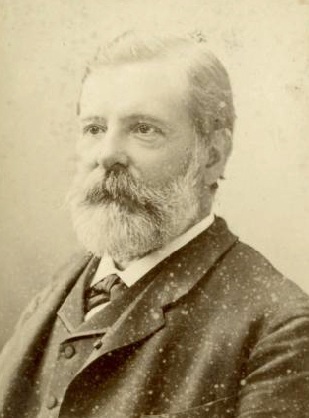
Marey’s work came to the attention of successful inventor Thomas Alva Edison, who had traveled to Paris in 1889 to see Marey’s camera. Edison’s assistant, W.K.L. Dickson, began work on a new type of camera and by 1891 had come up with the Kinetograph camera and Kinetoscope viewer.
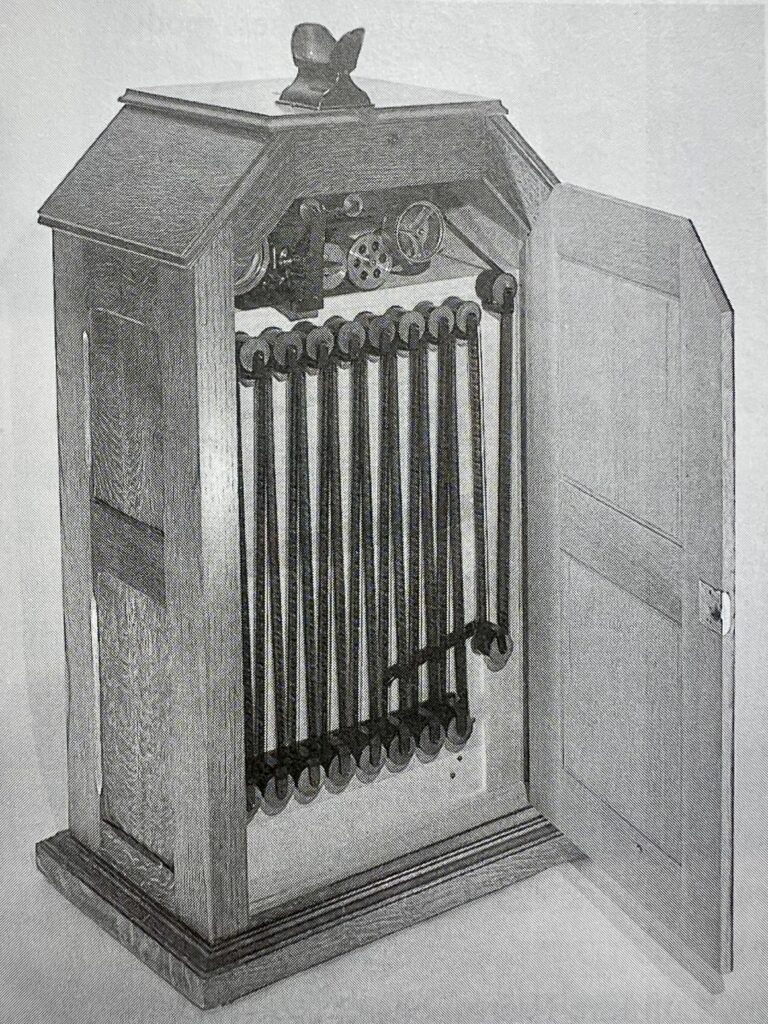
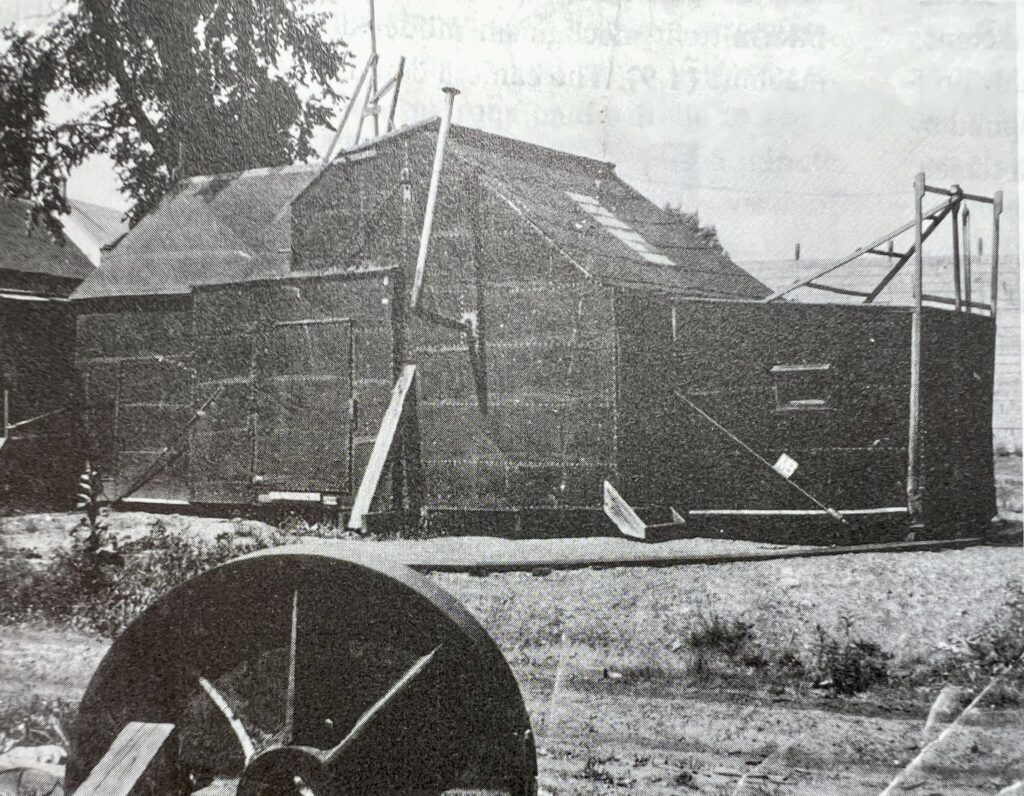
Edison wanted to use the Kinetoscope commercially, but first needed films to show, and so constructed a small studio, called “Black Maria,” at Edison’s New Jersey laboratory. By January 1893, they were ready for production. The Kinetoscope, which operated after the viewer deposited a coin, was able to show a film all of 20 seconds in length.
A feature on the early development of silent cinema wouldn’t be complete with a good mystery, which brings us to Frenchman Louis Le Prince, who mysteriously disappeared from a train in route to Paris on September 16, 1890, along with his valise of camera and projection equipment patent applications. In 1897, he was declared dead, but the valise was never found. It has remained one of the enduring enigmas of the early film history era.
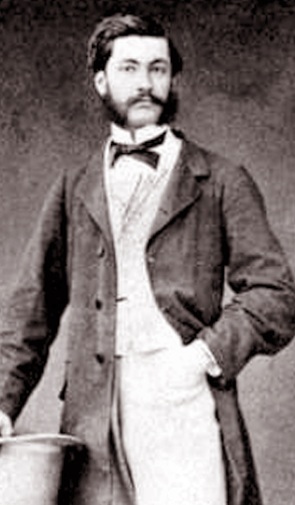
Louis Le Prince had been in competition with other early cinema developers at that time, including Thomas Edison and the Lumière Brothers. Le Prince gave us what is considered the very first motion picture sequence, filmed in 1888, The Roundhay Garden Scene. In addition, he filmed his son, Adolphe, playing the accordion, and was responsible for another early film sequence of carriage and pedestrian traffic on Leeds Bridge in England.
Le Prince used Kodak’s recently developed paper film and a camera of his own design, and shot the sequence at around 16 frames per second. Le Prince’s film sequence had to first be transferred to a transparent strip since he was reportedly unable to devise a satisfactory system for projection.
There has been much speculation about what really happened to Louis Le Prince. For instance, was Thomas Edison somehow involved in the mystery? Was some other competitor involved with Le Prince’s disappearance? Did Le Prince take his own life after discovering that his patents were now worthless? Did Le Prince’s brother who was the last to see him alive have any involvement in his demise?
Until next time…